
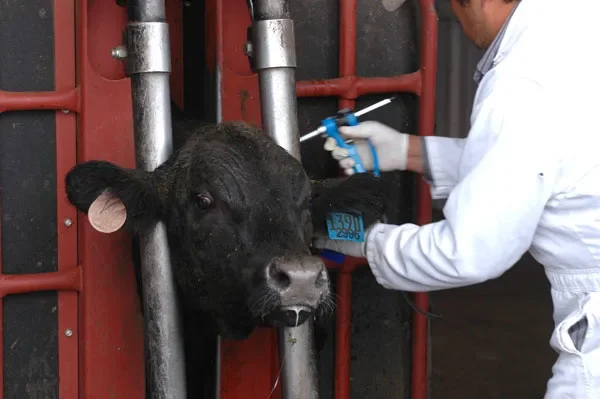
There’s an important difference between how an animal was raised and how the safety of its meat is regulated. Before you make your next beef purchase, learn what these labels actually mean, who verifies them, and what they do (and don’t) tell you about the beef you’re buying.
You may see several different phrases on beef packages communicating an animal was raised without antibiotics. These may include:
Raised Without Antibiotics
No Antibiotics Ever (NAE)
No Antibiotics Administered
No Added Antibiotics
Raised Antibiotic Free
According to the USDA FSIS, these are examples of claims indicating antibiotics were not administered to the animal at any point during the production process.
Although wording may vary, FSIS evaluates antibiotic-related claims on a case-by-case basis. To receive approval, the claim must be supported by documentation and accurately reflect how the animal was raised.
Who regulates these labels?
Three federal agencies play different roles in regulating beef labeling claims and antibiotic use:
USDA Food Safety and Inspection Service (FSIS): Reviews meat labeling claims to ensure they are truthful, not misleading, and supported by documentation. Animal-raising claims must be evaluated before they appear on meat labels sold to consumers.
Food and Drug Administration (FDA): Regulates animal drugs, including their approval, labeled uses, and withdrawal requirements.
USDA Agricultural Marketing Service (AMS): Administers the voluntary USDA Process Verified Program, which allows companies to have specific production practices independently audited and verified.
In short, FSIS oversees the accuracy of the label claim, the FDA regulates animal drug use, and the AMS offers an additional voluntary verification program.
What does it take for beef to carry this label?
According to the USDA FSIS, cattle marketed as “Raised Without Antibiotics” cannot be administered antibiotics through feed, water, or injections at any point during the production process.
Companies seeking approval for these claims must provide documentation demonstrating they meet the requirements. This includes written descriptions of production practices, records demonstrating how the claim is maintained, and procedures for identifying and separating animals that do not meet the requirements.
FSIS strongly encourages companies to use routine antibiotic sampling and testing or third-party certification to substantiate these claims. One voluntary option is the USDA Process Verified Program which allows companies to have their documented production practices independently reviewed through on-site audits conducted by AMS.
It’s important to understand not every beef product carrying a “Raised Without Antibiotics” claim is USDA Process Verified. FSIS label approval and AMS Process Verified certification are separate processes.
Understanding antibiotic use in cattle
Antibiotics are medications used in livestock to treat bacterial infections, control disease within groups of animals, and prevent disease in animals at risk. The FDA regulates the approval and label conditions of use for these medications.
When cattle receive an approved antibiotic, they must complete the drug’s required withdrawal period before slaughter. The length of this period depends on the specific medication and its approved conditions of use.
The withdrawal period is the time needed for drug residues in the animal’s edible tissues to decline to or below the FDA’s established legal tolerance.
The use of antibiotics during an animal’s life does not automatically mean the resulting beef is unsafe or contains illegal drug residues. Approved medication use, withdrawal requirements, and residue tolerances are important parts of the federal food safety system.
The Bottom Line
Understanding beef labels starts with knowing what they do—and don’t—tell you.
A “Raised Without Antibiotics” claim provides insight into a specific production practice, but it doesn’t tell the whole story of how the animal was raised or determine the overall quality of the beef.
Different production practices have different considerations, and understanding those differences allows consumers to make decisions based on what matters most to them.
Ultimately being an informed consumer means looking beyond the label and understanding the practices behind it.
-
https://ask.fsis.usda.gov/article/What-are-FSIS-labeling-requirements-for-imports
https://www.ams.usda.gov/services/auditing/process-verified-programs
https://www.govinfo.gov/content/pkg/FR-2019-12-27/pdf/2019-27845.pdf
https://www.ams.usda.gov/services/auditing/process-verified-programs
https://www.ams.usda.gov/services/auditing/process-verified-programs/faq